Nursery Safe Sleep: A UK Dad’s Setup Guide
Some of the links below are affiliate links. If you buy through them I may earn a small commission, at no extra cost to you. I only ever point you towards kit that fits safe sleep guidance — never anything that goes against it.
When my son was ten days old, we moved into a newly built house. Ten days. So let me be honest with you from the start: we did not have a finished nursery. We had a cot on order, a second-hand chest of drawers, an IKEA rug, and a baby who could not have cared less about any of it.
And here is the thing nobody selling you nursery furniture wants to say out loud — that was fine. Getting nursery safe sleep right in a UK home has almost nothing to do with how the room looks and almost everything to do with a few simple, boring decisions you make and then stick to. This guide is the version I wish someone had handed me: what the NHS and The Lullaby Trust actually say, what we did in our own house, and what I would do differently knowing what I know now.
Why I Wrote This
I am not a doctor. I am a shift worker and a dad. So everything in here that touches on safety comes straight from the NHS and The Lullaby Trust, with links, and I have flagged it clearly. Where I am just telling you what worked for us, I will say that too.
I want to be straight about something else as well: we got lucky with sleep. We never did any sleep training. Our boy went down around six in the evening, woke twice for a feed, and slept through to seven. Aside from two brutal weeks of colic and the odd fever, we had it easy compared to some of the stories I have heard from mates. I am not telling you that to brag — I am telling you so you trust me when I say the rest. I have no sleep course to sell you and no miracle product. I just want you to set the room up so your baby is safe, and then get on with the much harder job of being a parent.
What “Safe Sleep” Actually Means
If you read nothing else, read this section.
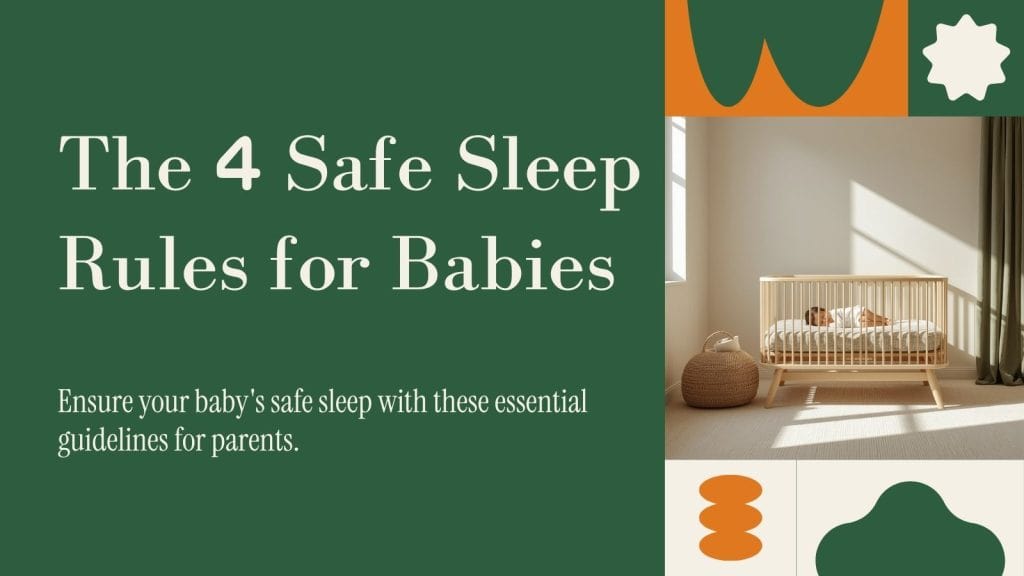
The advice from the NHS and The Lullaby Trust comes down to a handful of rules that have not really changed in years because they work:
- Always on the back. Every sleep, day and night, until your baby is at least 12 months old. Not the side, not the front — the back.
- A clear, separate sleep space. A firm, flat mattress and either light bedding or a baby sleeping bag. Nothing else. No pillows, no duvets, no cot bumpers, no toys.
- In your room for the first 6 months. Your baby should sleep in the same room as you, in their own separate cot or cot, for the first six months — for naps as well as at night.
- Feet to foot. If you use blankets, position your baby with their feet at the foot of the cot so they cannot wriggle down under the covers.
Now, the part most blogs either skip or use to scare you. Around four babies a week still die suddenly and unexpectedly in the UK. The Lullaby Trust estimates its advice has saved more than 31,000 babies since 1991. I am not putting those numbers here to frighten you at 2am — I am putting them here because this is the rare bit of parenting advice that genuinely, measurably moves the needle. The room you are setting up is one of the few places where doing the simple thing right actually matters that much. That is exactly why I bothered to write a guide about a bedroom.
One more practical thing: if your baby is ever unwell, has a fever, or you are worried, that is a conversation for your GP or NHS 111, not a blog. I will not pretend otherwise anywhere in this article.
Where to Put the Cot
Your baby needs their own flat, separate sleep surface in your room. We used a next-to-me cot — the kind that sits flush against your side of the bed — right up until six months, and I would recommend it to anyone.
It made the practical stuff so much easier. Night feeds were a reach away. Putting him back down once he had dropped off, without the full operation of crossing a dark room, saved our sanity. And because it is a proper separate surface with its own firm mattress, it keeps you inside safe sleep guidance while still having your baby right next to you. A next-to-me bedside cot (available at John Lewis, Argos and Amazon UK) is genuinely one of the few bits of kit I would tell you to spend money on.
A few rules for placement, whatever you use:
- Keep the cot away from the wall, radiators, and anything with a cord — blind cords especially.
- Make sure there are no gaps between a bedside cot and your mattress where a baby could roll into.
- Never let your baby sleep on a sofa or in an armchair with you. The Lullaby Trust says the risk of sudden infant death is around 50 times higher when an adult falls asleep with a baby on a sofa or armchair. This is the one I want every tired dad reading at 3am to remember. If you feel yourself going, put the baby down in the cot first.
The Right Mattress and Bedding
This is where people overspend on the wrong things and skip the things that matter.
The mattress should be firm, flat and waterproof, and it should fit the cot with no gaps. The simple test: when you lay your baby down, their head should not sink in more than a few millimetres. If it does, it is too soft. That is the whole science of it.
For us, the setup was deliberately bare: just the mattress with a waterproof cover, and our boy slept in a sleeping bag, on his back, with no pillow. That is it. He only ever wet through during a fever once he was out of nappies at night — and even then the waterproof cover did its job.
On warmth, a baby sleeping bag takes the guesswork out of it because there is nothing loose to ride up over the face. As a rough guide, a 1.0 TOG bag covers most of the year and a 2.5 TOG is for proper cold winter nights. No hats indoors for sleep — babies cool down through their heads, and a hat indoors is an overheating risk. A baby sleeping bag in the right TOG and a couple of fitted waterproof mattress protectors are cheap, do the job, and you will use them constantly.
Now the part I need to be firm about, because it protects your baby and it is also where a lot of dads get sold a lovely-looking product that they should not buy. The Lullaby Trust advises against sleep pods, baby nests, weighted sleeping bags, and cot bumpers. They look cosy. They are marketed hard at exactly the anxious new parent you might be right now. But the safest cot is an almost empty one — firm flat mattress, fitted sheet or sleeping bag, and nothing else. If a product’s whole selling point is that it makes the cot feel snugger, that is the product to walk past.
Getting the Room Conditions Right
Light matters as much as temperature here, and it is the thing most people sort last. Getting the room properly dark makes a bigger difference to daytime naps than anything else you can buy — I have gone through what actually works in UK homes in the guide to blackout blinds for a nursery.
Get the basics of the room right and you remove a whole category of problems. This is the bit where the rest of our nursery cluster will live, so think of this as the hub.
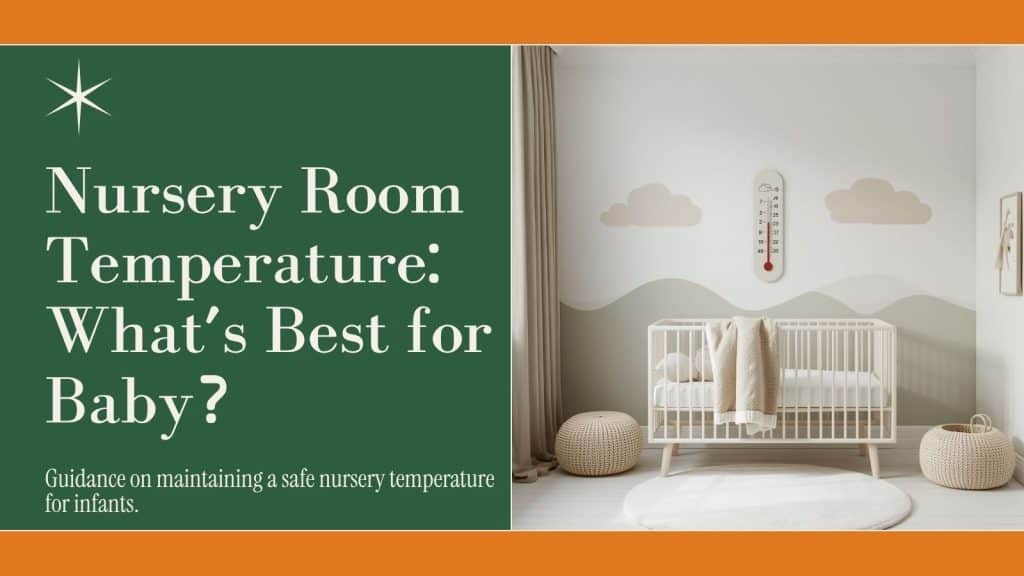
Temperature first. The NHS and Lullaby Trust both put a baby’s room at 16–20°C. Buy a cheap room thermometer — do not guess. Overheating raises the risk of sudden infant death, so it is genuinely worth getting right. And here is the trick most first-time dads get wrong: do not judge whether your baby is too hot by their hands or feet, which are nearly always cool. Slip a hand onto their chest or the back of the neck. If that feels hot or sweaty, take a layer off.
Light. We had blackout blinds and curtains in from day one and I would not do a nursery without them. They help with daytime naps and early summer mornings when the sun is up at half four. (I will be writing a full piece on blackout blinds for nurseries soon — for now, just get something that blocks the light properly.)
Sound and damp matter too — I will link out to dedicated guides on white noise and on dealing with nursery damp once they are live. The short version: steady, low background noise can help some babies settle, and a damp, mouldy room is a health problem you want to fix before the baby moves in, not after.
A quick word on UK houses specifically. We are lucky to be in a new build, but plenty of you are in older Victorian and Edwardian places — beautiful, and freezing. Thick solid brick holds the cold and the heat unevenly, and the nursery is often the coldest room in the house. If that is you, it is worth reading how to go about keeping an old UK home warm enough without overheating the cot, because the two pull against each other.
Do You Need a Baby Monitor?
Honest answer: maybe. It depends on your house and your nerves more than on your baby.
For the first six months your baby is in the room with you, so a monitor is doing very little — you can hear them breathe. The monitor earns its place later, when they move into their own room, or sooner if your home is laid out so that you genuinely cannot hear the nursery from the living room. In a small flat, you often do not need one at all. In a three-storey terrace, you probably do.
If you decide you want one, I have done the legwork for you in our full guide to the best baby monitors UK, which covers the UK-specific stuff nobody else bothers with — DECT versus WiFi, thick brick walls, and the security side. And when you are wondering how long this phase lasts, here is when to stop using a baby monitor. Do not let anyone guilt you into buying the most expensive model on the shelf. A monitor is a convenience, not a safety device — the safety comes from the cot setup we have already covered.
Nursery Essentials Checklist
I have put together a one-page Nursery Safe Sleep Checklist you can print and stick on the wall — the genuinely essential kit, the safe sleep rules in plain English, and the things you can happily skip. It is the list I wish we had had before we walked into a baby shop and got talked into half a van’s worth of stuff we never used.
What We Skipped — An Honest Dad’s Take
Here is the part you will not get from a brand’s blog.
We barely decorated. The cot did not even arrive until our boy was four months old. We bought the chest of drawers second-hand, threw down an IKEA rug, and that was the nursery for a good while. Because we had moved house when he was ten days old, we simply did not have the time or the energy to make it a Pinterest project — and it turned out he slept exactly as well in a half-empty room as he would have in a styled one. If you are stressing about getting the nursery “finished” before the baby comes, let me take that off your plate. They do not care.
We never sleep-trained, and I would not pretend that was clever parenting — it was luck and a baby with a steady temperament. The one thing I will say did help was keeping nap times consistent. When we let the day drift, we paid for it at bedtime. A predictable rhythm did more for our nights than any product. If sleep is the thing keeping you up — literally — I wrote separately about how we handled our baby’s sleep routine.
And now the honest bit I promised. Early on, before I had properly read the guidance, we used one of those padded nest-style cushions for naps, always with one of us in the room. On holiday, I once “secured” him on a big hotel bed with a rolled-up towel. I am telling you this not because it was a good idea — it was not. The Lullaby Trust advises against nests and pods, and a separate firm flat surface beats a towel on an adult bed every time. If I had my time again, those naps would have been in the cot, full stop. That is the difference between what feels safe and what the evidence says is safe — and on this topic I would back the evidence, even over my own instincts.
The best memory from all of it costs nothing. We stitched a little duck onto his sleeping bag, and some nights we would just sit by the cot and watch it rise and fall on his chest, not saying a word, for far longer than two grown adults should reasonably sit in silence. That is the nursery I would tell you to build. The rest is just furniture.

FAQ
What temperature should a baby’s room be? The NHS and The Lullaby Trust recommend 16–20°C. Use a room thermometer rather than guessing, and check whether your baby is too warm by feeling their chest or the back of their neck, not their hands or feet.
Where should a newborn sleep? On their back, on a firm flat mattress, in their own clear cot or cot, in the same room as you for the first six months — for daytime naps as well as at night.
Do I need a baby monitor for safe sleep? No. A monitor is a convenience, not a safety device. Safe sleep comes from how the cot is set up and where it is placed. A monitor becomes useful mainly once your baby moves into their own room.
Are sleep pods and baby nests safe? The Lullaby Trust advises against sleep pods, baby nests, weighted sleeping bags and cot bumpers. The safest cot is a nearly empty one: a firm flat mattress and either light bedding or a sleeping bag.
How long should my baby sleep in my room? The guidance is the first six months, day and night. After that, many families move the baby into their own room — which is often when a monitor starts to earn its keep.
My baby has a fever or seems unwell at night — what should I do? That is a question for your GP or NHS 111, not a blog. If you are ever worried about your baby’s health, get proper medical advice straight away.
This guide reflects current NHS and Lullaby Trust safe sleep guidance at the time of writing. It is general information from one dad to another, not medical advice — always follow the advice of your own healthcare professionals.