Best Blackout Blinds for a Nursery UK: A Dad’s Honest Guide
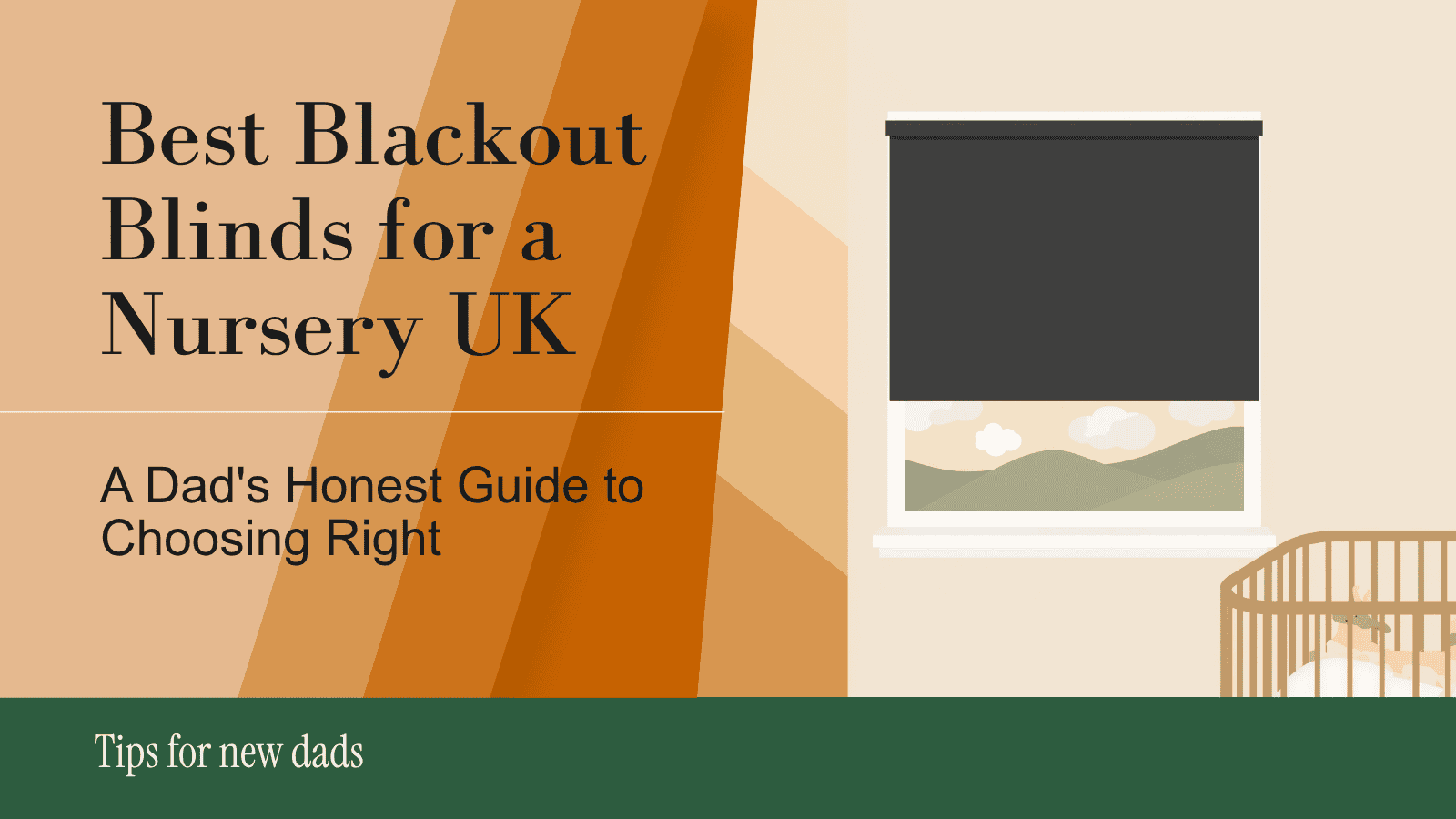
Our nursery has a window facing east. Sounds lovely — until your first proper UK summer, when the sun’s up at half four and your toddler is standing in the cot at 4:45 like it’s the middle of the afternoon. That was the summer I learned what blackout blinds for a nursery actually do, and the summer I stopped pretending heavy curtains were enough.
So this is my honest take. When you actually need blackout blinds, when curtains will do the job for less money, what I’d buy by type, how to fit them in an awkward old house or a rented flat — and the one safety bit far too many guides leave out completely. No “transform your child’s sleep forever” nonsense. Just what’s worked in our house and what the research actually says.
A quick note: some links below are affiliate links. If you buy through one I may earn a small commission, at no extra cost to you. I only point at things I’d happily put in my own son’s room.
Do you actually need blackout blinds?
Here’s the honest answer most retailers won’t give you: sometimes, not always.
In the UK, summer is the problem. In June it’s light until gone 10pm and the sun’s back up around half four. If your little one’s room faces east, that early light hits like an alarm clock you can’t switch off. Add daytime naps — when it’s bright outside and you’re trying to convince a baby it’s bedtime — and you can see why blackout matters here more than it does in, say, a Mediterranean flat with shutters built in.
Light is one of the strongest cues your child’s body clock has. Bright morning light tells the brain “day’s started,” whether or not anyone in the house agrees. Block it, and you give a baby’s developing sleep rhythm a fighting chance, especially for those summer early starts and afternoon naps.
But blackout blinds aren’t magic. If your room faces north, your child’s already a solid sleeper, or it’s the middle of winter when it’s dark by four anyway, decent lined curtains might do everything you need. Darkness is one lever. Routine, timing and a calm wind-down matter just as much — I’ve gone into the wider picture in my baby sleep schedule guide for dads, and blackout is one piece of that, not the whole thing.
Quick gut check: if early light or bright nap-time rooms are waking your child, blackout blinds for the nursery are worth it. If they’re sleeping fine, don’t spend money solving a problem you don’t have.
Blackout blinds vs blackout curtains
This is the question I get most, so let’s be straight about it.
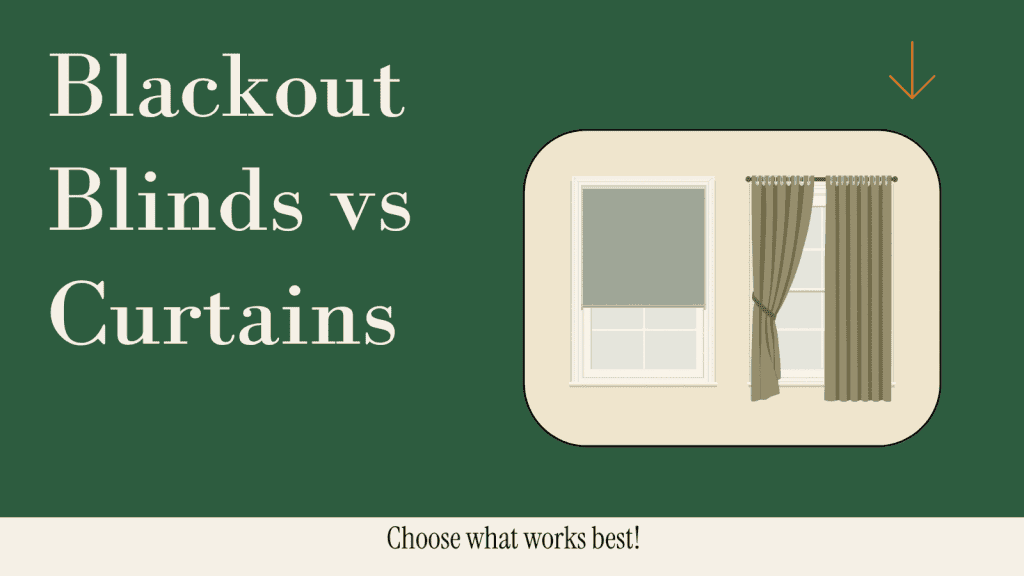
Blackout curtains are cheaper, dead easy to hang, and brilliant for renters — pole goes up, curtains go on, done. The catch is light leak. Fabric hangs loose, so light sneaks around the sides, over the top, and pools in at the bottom. A “blackout” curtain that leaks light at every edge is really just a dark curtain. In a north-facing room in winter, fine. Against a June sunrise, not even close.
Blackout blinds sit flush to the window. Fitted properly inside the recess — or, better, mounted on the wall above and wider than the window — they cut the side leak that curtains can’t. They look neater, take up no floor space (handy in a small nursery), and a child can’t grab and yank a roller the way they can a curtain.
The downside: blinds cost more, and a badly fitted blind leaks light just like a curtain does. Fit matters more than price here. I’d take a well-measured mid-range roller over an expensive one hung carelessly every time.
My honest recommendation: if you can, do both. A blackout roller blind fitted tight to the recess kills the bulk of the light, and curtains over the top mop up the edges and add a bit of warmth in winter. That combination is what finally fixed our bay window.
Best blackout blinds for a nursery UK
There’s no single “best” blind — it depends on your window and your budget. Here’s how I’d think about it by type. Argos, John Lewis and Amazon UK all carry every category below.
1. Fitted blackout roller blind. The workhorse. Off-the-shelf sizes are cheap and fine if your window’s a standard size; made-to-measure costs more but fits the recess properly, which is where the darkness actually comes from. This is what most nurseries need.
2. Blackout roller with side channels (or a “perfect fit” frame). If you want the room properly dark — pitch black, no glow at the edges — a blind that runs in side channels is the one. It’s the closest thing to total blackout you’ll get without boarding the window up. Worth it for serious early risers.
3. Blackout lining for existing curtains. The budget upgrade. If you’ve already got curtains you like, a blackout liner that clips onto the same hooks adds proper darkness for very little money. Great option for rented homes where you don’t want to drill.
4. Portable / suction blackout blind. Covered in its own section below — these are for travel, not your everyday nursery.
Here’s what we actually did, in order.
We started simple: blackout curtains. We liked them enough that we ended up putting the same ones right through the house — living room, master bedroom, the spare room, and of course the nursery. The nursery pair — PONY DANCE star-print blackout curtains on Amazon UK — cost us £26.95, and there’s a big range of sizes and patterns to pick from. Honestly, for a lot of rooms they do the job on their own — if you’re not fighting a brutal east-facing sunrise, this might be all you need.
After about two years in the house, I wanted better. I work shifts, so I’m often trying to sleep when it’s bright out, and our little one is an early riser in summer — proper darkness isn’t a nice-to-have for us, it’s the difference between a decent morning and a 4:45 start. So we had day/night roller blinds fitted. I went with a local specialist rather than doing it myself: he came round, measured up, gave me a quote, ordered the materials and fitted the lot in a single day. It cost us £1,500 back in 2023 — not cheap, but for the level of blackout I need on a shift pattern, worth every penny.
One honest caveat: you don’t have to spend that. Mine was a made-to-measure job because I wanted it spot on. I’ve fitted standard off-the-shelf roller blinds at a couple of mates’ places and it’s genuinely not hard — the kit usually comes with everything you need and clear instructions. If your window’s a standard size, an off-the-shelf blackout roller and an afternoon is plenty
How dark should a nursery be?
Don’t fall for the idea that a nursery has to be a pitch-black cave. It doesn’t.
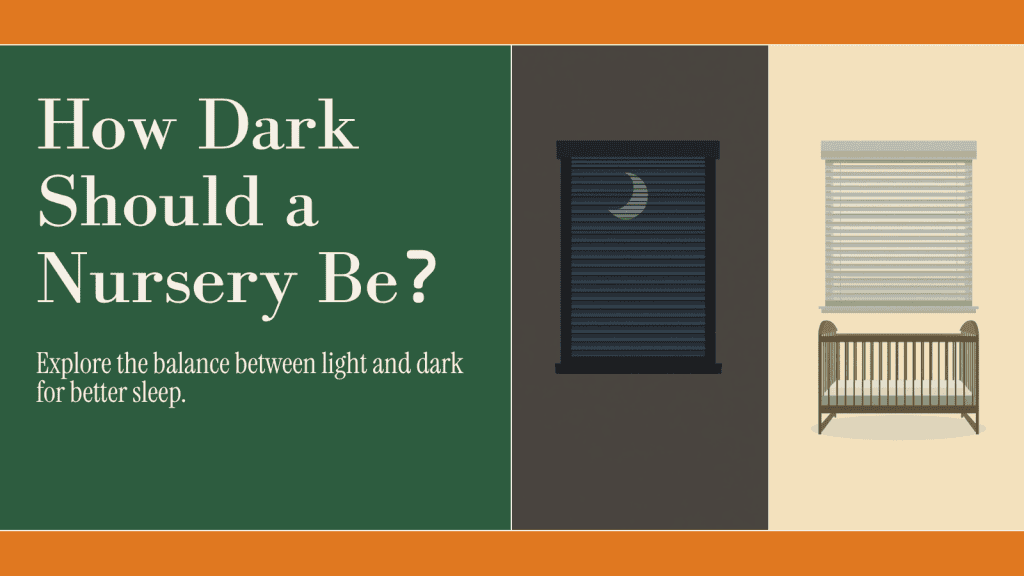
For night sleep, properly dark helps — dark enough that you couldn’t comfortably read a book is a good benchmark. For daytime naps, you don’t need to go that far. Some light during the day actually helps a baby learn the difference between a nap and proper night-time sleep, so don’t stress if a nap room is just dim rather than blacked out.
There’s a useful summer bonus here too. Closing the blinds during the day doesn’t only block light — it keeps the heat out and the room cooler, which matters more than darkness when there’s a heatwave and the nursery’s turning into an oven. The comfortable range to aim for is roughly 16–20°C, which is what the Lullaby Trust points to, and I’ve covered managing that in my guide to the right room temperature for a baby. On a hot day, blinds down in the morning is one of the simplest tricks going.
Fitting them in a rented or Victorian home
This is where the generic guides fall apart, because they assume you’ve got a standard modern window and a drill you’re allowed to use. Plenty of us don’t.
Older UK houses are awkward. Victorian and Edwardian places come with bay windows, deep recesses, sash windows and frames that are never quite square. A bay usually means you can’t use one blind — you’ll need a separate blind for each pane, so budget and measure accordingly. And on an odd-shaped window, mounting the blind on the wall above and wider than the opening (a “face fit”) often blocks light better than squeezing it into a wonky recess.
If you’re renting, you don’t have to drill. A few options that keep your deposit safe:
- Tension or spring-fit blinds that wedge into the recess with no screws.
- No-drill brackets that fix with strong adhesive strips.
- Blackout curtain liners that clip onto the curtains already there.
- Portable suction blinds (see below) for a fully temporary fix.
The trick in any awkward room is accepting that “good enough” beats “perfect.” A blind that blocks 90% of the light and goes up without damaging anything is worth more than the dream setup you’re not allowed to install.

Travel & portable blackout blinds
When you travel with a small child, light becomes your enemy all over again — hotel rooms, the grandparents’ spare room, a caravan, all of them with whatever curtains came with the place.
This is where a portable blackout blind earns its keep. The suction-cup type (the Gro Anywhere Blind is the well-known UK one) sticks straight onto the glass, adjusts to fit most windows, and packs flat into a bag. For holidays and visits, it’s genuinely brilliant — we don’t travel without one now.
Be realistic about the limits, though. Suction cups struggle on old, textured or dirty glass, and you’ll always get a bit of leak around the edges. It’s a travel solution, not a replacement for a proper fitted blind at home.
We keep a portable blackout blind in the bag whenever we travel, just in case — and it’s bailed us out more times than I expected. Ours is the Gro Anywhere I mentioned above: £35, packs down to nothing, weighs next to nothing, and it earns its place in exactly the situations you can’t control — a streetlight right outside the window, or a room that faces east at the grandparents’. We’ve used it around 20 times now, so under two quid a trip, and that only gets better every time we pack it.
One heads-up: when I went to grab a link for this, I couldn’t find the Gro Anywhere in stock anymore. So the one I’d point you to instead is the Tommee Tippee Sleeptight portable blackout blind — same idea, sticks to the glass, packs flat, and a bit cheaper than ours was. I’ve not had this exact one on a trip myself, but it’s the closest equivalent to what we use, and Tommee Tippee is a brand I trust for this kind of thing. It comes in two sizes, and if our Gro taught me anything, it’s to go large (198 × 130 cm): you never know what window you’ll get at the grandparents’, and a blind that’s too big still works, while one that’s too small just leaks light round the edges.
Blind cord safety — the bit too many guides skip
I won’t write a cheerful buying guide and skip this, because it’s the part that actually matters most.
Looped blind cords and chains are a strangulation risk to young children, and it’s not a rare one. RoSPA reports that nine children died from blind cord strangulation in the UK between April 2019 and March 2022, and that at least 33 children have died this way since 2001 — roughly one or two every single year. The Child Accident Prevention Trust puts the danger starkly: a toddler can lose consciousness in around 15 seconds, with death possible in two to three minutes. It happens fast, and almost always in a bedroom, with the child unsupervised for only a moment.
The law tightened in 2014. New blinds sold in the UK with looped cords must come with child safety devices fitted or supplied as standard (covered by the BS EN 13120 family of standards). The problem is all the older blinds already hanging in homes — especially in rented or inherited places — that were never compliant and never will be unless someone makes them safe.
Here’s what actually keeps a child safe:
- Choose cordless blinds for the nursery. If at all possible, this is the single best move. No cord, no loop, no risk.
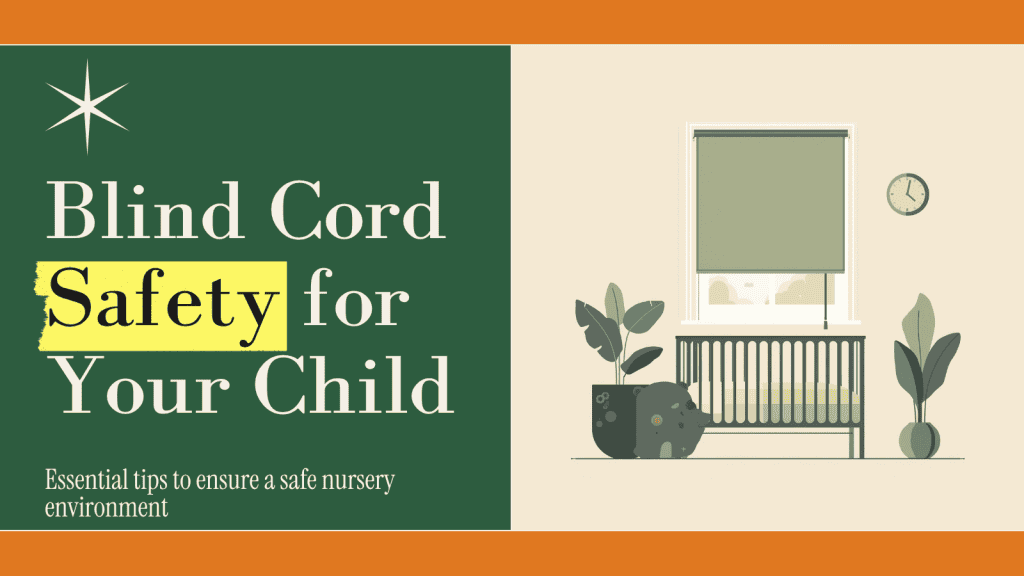
- Keep the cot away from the window. Don’t position the cot, bed, or any furniture a child could climb on within reach of a cord. RoSPA’s advice is blunt on this.
- Fit a cleat or safety device to tie cords taut and high up, well out of reach.
- Check Roman blinds — the cords on the back should have breakaway connectors that come apart under pressure.
- Don’t cut cords. RoSPA specifically warns against it — cutting can make a blind more dangerous, not less, by leaving a longer loose cord.
This is the same principle I bang on about with monitor cables — anything long and looped near a cot is a hazard, full stop. I’ve covered safe placement and cable management in my baby monitor set-up guide, and the thinking is identical: clear the cot zone of anything a curious toddler can get round their neck.
If you take one thing from this whole post, take this section.
FAQ
Do I need blackout blinds for a nursery? If early summer light or bright daytime rooms are waking your child, yes — they’re well worth it. If your child sleeps fine and the room’s naturally dark, lined curtains may be all you need. It’s a fix for a specific problem, not a must-buy for every nursery.
Are blackout blinds or curtains better? Blinds block light better because they fit flush to the window and don’t leak around the sides the way loose curtains do. Curtains are cheaper and easier for renters. The best result usually comes from a fitted blackout blind plus curtains over the top.
Do blackout blinds help babies sleep? They help by removing the light that signals “wake up” — especially useful for summer early starts and daytime naps. They’re one piece of good sleep, alongside routine and timing, not a guaranteed fix on their own.
Are blackout blinds safe around a cot? Only if there are no looped cords within reach. Choose cordless blinds for the nursery, keep the cot away from the window, and fit safety devices to any existing cords. Looped cords are a genuine strangulation risk for young children.
Can you get blackout blinds for a rented home? Yes — tension-fit blinds, no-drill adhesive brackets, blackout curtain liners and portable suction blinds all give you darkness without putting a single screw in the wall.
Sorting the whole room, not just the window? I’ve put together a full nursery setup and safe sleep guide that pulls all of this together — light, temperature, the cot, and the safety bits that actually matter.