Best Baby Monitors Without Subscription UK (2026): No Monthly Fees, No Compromises
On 15 September 2025, BT quietly shut down its Smart Controls app.
No replacement. No warning. UK parents who’d bought the BT Smart Baby Monitor woke up to find the app-based features they’d paid for just — gone. Bricked. The camera still worked, but everything tied to the app? Dead.
I’m not sharing this to scare you. I’m sharing it because this is the best argument for choosing a baby monitor with no subscription — or at the very least, no mandatory app — that I’ve ever seen. And it played out in the UK, with a brand most British parents trust.
Some links on this page are affiliate links. If you buy through them, I earn a small commission at no extra cost to you. It doesn’t change what I recommend — and you’ll notice I tell you which monitors to skip, too.
Here’s the thing: when you buy a monitor that requires a monthly fee or an active company server to function, you’re not really buying a monitor. You’re renting one. The moment that company decides to pivot, get acquired, or simply switch off the service — your £250 device becomes a paperweight.
I’ve put together this guide specifically for UK parents who are done with subscription creep and want a baby monitor that does what it’s supposed to do: work reliably, without recurring costs, and without sending your baby’s bedroom audio to a server in another country.
We’ll cover the technology behind subscription-free monitors, the UK-specific risks you need to know about, our top picks at different price points, and a real two-year cost comparison in £ so you can see exactly what you’re saving.
If you’re not sure yet whether you even want a no-subscription model — or you want the full picture on all monitor types — our full baby monitor buying guide covers everything from digital to smart monitors in one place.
Why “No Subscription” Matters More Than You Think in 2026
UK parents are tired of subscriptions. We’re already paying for Netflix, Spotify, Disney+, the car, the broadband, and whatever else crept onto the direct debit list without us noticing. The idea of adding a monthly fee to watch the baby sleep sits badly — and rightly so.
But subscription fatigue is only part of the story. There are three reasons that “baby monitor no subscription” is now a serious buying criterion, not just a nice-to-have.
The BT App Shutdown — A Warning Every UK Parent Should Hear
BT confirmed on its help pages that the BT Smart Controls app was permanently shut down on 15 September 2025. The BT Smart Baby Monitor (both the 2.8″ and 5″ versions) lost all app-connected features overnight. No replacement app has been released.
The camera unit itself still worked as a standalone device — but parents who bought the “Smart” version specifically for its app features were left with a product that no longer did what they’d paid for.
This isn’t a niche manufacturer. This is BT — a company that’s been in British homes since before most of us were born. If it can happen to BT, it can happen to any brand.
The lesson is simple: any monitor that requires an active company app or server is subject to this risk. A DECT monitor with a dedicated parent unit is not — because it doesn’t need the internet, an app, or anyone else’s server to function.
PSTI Act 2022 — The UK Law That Changes the Conversation
Most UK parenting sites haven’t connected the dots on this yet, so let me be direct about it.
The Product Security and Telecommunications Infrastructure (PSTI) Act 2022 came into force on 29 April 2024. Baby monitors are explicitly in scope as “consumer connectable products.” The law bans default passwords, requires manufacturers to disclose update policies, and mandates a minimum security update period.
Fines for non-compliance sit at up to £10 million or 4% of global turnover — plus up to £20,000 per day for ongoing violations. The Office for Product Safety and Standards (OPSS) enforces it.
Why does this matter for your buying decision?
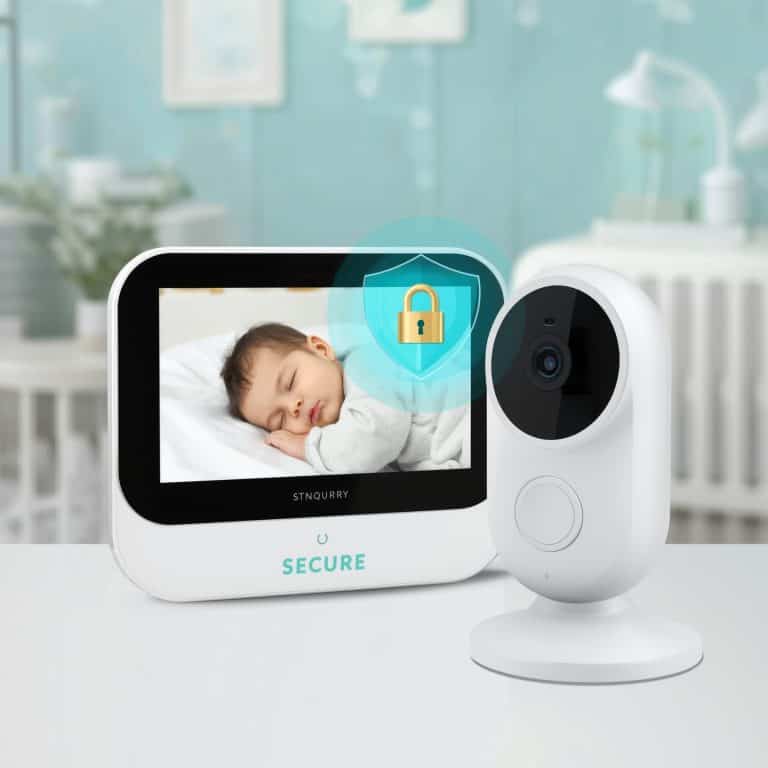
Because a non-WiFi DECT or FHSS monitor sidesteps the entire problem PSTI is trying to solve. If the monitor doesn’t connect to the internet, there’s no cloud vulnerability, no default password to exploit, and no server to shut down — risks the NCSC flags specifically for connected home devices. The law is working to make smart monitors safer — but a DECT monitor was already safe in this respect, by design.
For the full picture on baby monitor hacking risks and how to protect your family, I’ve covered that in depth separately. The short version: if privacy matters to you, a local monitor is the cleanest solution.
The Real Cost of “Cheap” Smart Monitors
Here’s the maths that buying guides never show you.
A Nanit Pro camera costs around £250. Sounds reasonable. But the sleep analytics, breathing monitoring, and video history you actually want sit behind the Nanit Insights subscription — £50/year for the basic plan after the free first year. Over two years, you’ve spent £300.
A HelloBaby HB6550 costs under £100. Over two years: still under £100.
That’s not an argument that the Nanit is bad — it’s a genuinely impressive piece of kit. But you should go in with eyes open about what you’re actually committing to.
What to Look for in a Subscription-Free Baby Monitor
DECT vs WiFi — Which Technology Actually Suits UK Homes?
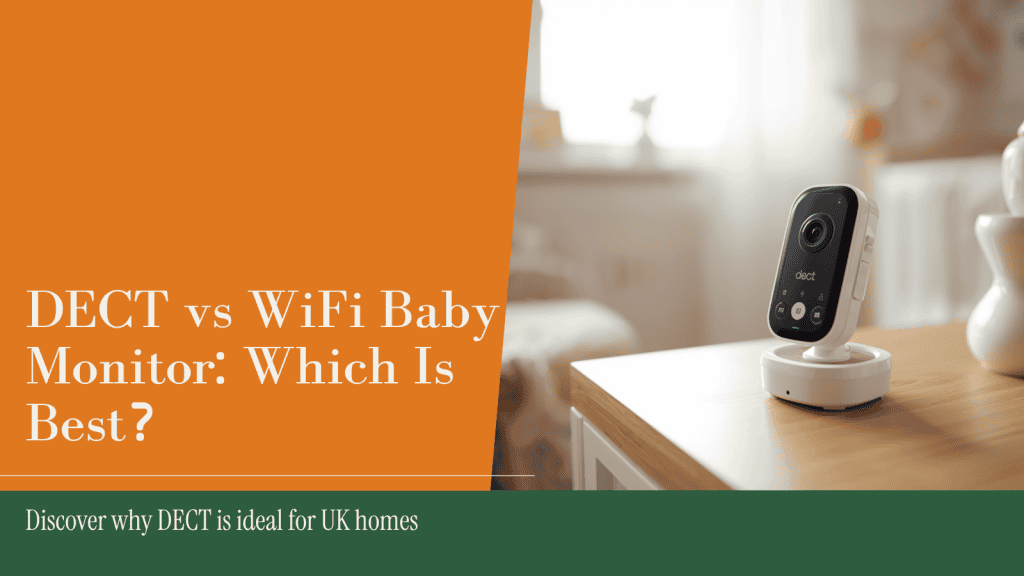
This comes up constantly, so let me explain it properly.
WiFi monitors (2.4GHz or 5GHz) send video over your home network to an app on your phone. Features are excellent, but performance depends on your router, your broadband, and — critically — the company’s servers staying online.
DECT monitors (1.9GHz) use a dedicated frequency band with a closed, private signal between the camera unit and a handheld parent unit. No internet. No app. No server. The 1.9GHz frequency also penetrates UK brick walls better than 2.4GHz WiFi — which is a real advantage in Victorian terraced houses and any home with thick internal walls.
FHSS monitors (Frequency Hopping Spread Spectrum, usually 2.4GHz) use a dedicated radio channel between camera and parent unit — no internet connection required, but more susceptible to interference than DECT. Still subscription-free by design.
For the full technical breakdown of why DECT beats WiFi in UK homes, I’ve covered it specifically for British parents, including how Victorian house walls affect signal and what to expect in different home types.
If you live in a flat or newer build with dense neighbour WiFi activity, DECT is worth serious consideration — I cover the interference issues specific to flats and dense UK housing in a separate guide.
Screen Size, Range, and Battery Life
For subscription-free monitors, you’re working with a dedicated parent unit (a handheld screen) rather than your phone. Key specs to prioritise:
- Screen size: 4.3″ minimum. 5″ is noticeably better at night, especially when you’re sleep-deprived and squinting.
- Range: Stated ranges are measured in open air. In a two-storey UK semi-detached with solid internal walls, expect roughly 40-60% of the quoted figure. A monitor rated at 300m in open air typically gives you reliable coverage through 2-3 walls.
- Battery life on parent unit: Look for 8 hours minimum on standby/listening mode. Anything under 6 hours becomes annoying quickly during long nights.
Night Vision, Two-Way Talk, and Temperature Sensors
These three features are non-negotiable for most parents:
- Night vision: Infrared is standard across all the monitors in this guide. Look for clear contrast at 2-3 metres — the useful range for a nursery camera.
- Two-way talk: Allows you to soothe without entering the room. Most DECT monitors include this; verify it’s press-to-talk (better) rather than always-on voice activation (can create feedback loops).
- Room temperature display: More useful than it sounds. UK nurseries can vary wildly — you want to know if the room has dropped below 16°C before you trek upstairs to add a layer.
Best Baby Monitors Without Subscription UK 2026 — Our Top Picks
I’ve focused on monitors that are genuinely available from UK retailers right now — I checked every listing myself rather than copying spec sheets. Where stock is limited or the seller looks questionable, I’ve flagged it.

Best Overall — Tommee Tippee Dreamee
Key specs: 4.3″ screen, DECT, 330° pan and 110° tilt, 2× zoom, CrySensor, 300m claimed range Where to buy: Amazon UK, Currys, Superdrug — check the current price Subscription: None. Ever.
This is the one I’d put at the top of the list for most UK parents. The Dreamee (not to be confused with the newer Wi-Fi Dreamsense) is a fully DECT monitor — no internet, no app, no subscription. Ever.
The CrySensor is genuinely useful: it distinguishes between your baby’s cry and background noise, so you’re not woken up by the radiator clicking. Worth checking which variant you’re buying, though — Tommee Tippee sells Dreamee in more than one configuration, and the listing I checked on Amazon UK was video and sound only, with no movement sensor mat in the box.
Pan-tilt is smooth and responsive on the parent unit, and Tommee Tippee is one of those UK brands that parents already trust. It’s well-stocked at Currys and Superdrug — two retailers that regularly run promotions worth checking.
Pros:
- Excellent DECT signal — penetrates UK brick walls reliably
- CrySensor reduces false alarms
- Pan-tilt on parent unit, no separate app needed
- Widely available across UK retailers
Cons:
- Screen is 4.3″ rather than 5″ — smaller than some competitors
- Not to be confused with the newer Dreamsense (WiFi, different product)
- At the higher end of the price range for DECT monitors
Best for: Parents who want the most full-featured subscription-free monitor available in UK shops right now.
Check the Tommee Tippee Dreamee on Amazon UK →
Best Budget — HelloBaby HB6550
Key specs: 5″ display, 2.4GHz FHSS, up to 30hrs battery, night vision, two-way talk, no app Where to buy: Amazon UK — check the current price Subscription: None, and there’s no account to create either.
This is the cheapest monitor on this list that I’d actually recommend, and I’ve written about it at length because it keeps surprising me. There’s no app. There’s no login. You take it out of the box, plug both halves in, and it works — and it carries on working if your broadband goes down, which is more than most smart monitors can say.
The trade-off is picture quality. At 480p you’re getting “is he breathing and is he still in the cot” rather than a crisp image. For a first baby in a small flat, that’s usually enough. If you want to see facial detail, spend more.
I’ve covered this one in detail, including how it compares to its newer sibling: my full HelloBaby HB6550 review and HB6550 vs HB6560.
Check the HelloBaby HB6550 on Amazon UK →
A Warning About the VTech VM5463 on Amazon UK
The VTech VM5463 is a MadeForMums Gold winner and it appears on practically every UK baby monitor list. I was going to recommend it here. Then I actually looked at what’s on sale.
On Amazon UK right now, the single-camera VM5463 isn’t sold by VTech or by Amazon. It’s sold by third-party resellers — and one of the listings I found was fulfilled by an online bookshop. That listing has the product name mangled, and its own specification sheet describes this baby monitor as an outdoor device. The price sat well above what Mamas & Papas charge for the same unit.
The other listing that comes up is the VM5463-2 — a different product with two cameras and a price to match. If you search the model number and click the first result, it’s easy to end up buying the wrong thing at nearly double the price.
This matters beyond the money. Buying a baby monitor through a grey-market reseller means you may have no UK warranty, no route to VTech UK support, and no guarantee the plug in the box is the one your sockets take. For a device that runs unattended in your child’s room every night, that’s not a corner I’d cut.
If you want the VM5463, buy it from Mamas & Papas or Smyths Toys directly. Both stock it as an official line at a sensible price. I’m not linking to the Amazon listings, because I don’t think you should use them.
Best for Range — Motorola VM75
Key specs: 5″ display, FHSS 2.4GHz, 1,000ft (300m) range, lullabies, two-way talk, room temperature Where to buy: Amazon UK — check the current price and who you’re buying from Subscription: None. Manufacturer explicitly states “No WiFi or App needed.”
The VM75 punches above its price point on range performance. Motorola’s FHSS (Frequency Hopping Spread Spectrum) technology is less elegant than DECT but provides a strong, stable signal that holds up across larger UK homes — detached houses, houses with outbuildings, etc.
It’s worth knowing this is a FHSS monitor rather than DECT, which means it operates on the 2.4GHz band — the same frequency as most home WiFi routers. In practice, FHSS hops between frequencies rapidly enough that interference is rarely a problem, but if you have particularly dense neighbourhood WiFi (a common UK issue), DECT will always be the cleaner choice.
Pros:
- Strong range performance — excellent for larger homes
- Clear 5″ display
- One of the most affordable no-subscription monitors available
- Motorola brand reliability
Cons:
- FHSS rather than DECT — theoretically more susceptible to 2.4GHz interference
- UK availability slightly more limited (Tony Kealys, some Amazon UK sellers)
- Basic feature set — no pan/tilt
Best for: Parents in larger homes who want strong range performance without paying premium prices.
Check the Motorola VM75 on Amazon UK →
Best for Two Children — Babysense Split-Screen 2-Cam
Key specs: 5.5″ split-screen, two cameras, 1080p, FHSS, no WiFi Where to buy: Amazon UK, babysensemonitors.co.uk — check the current price Subscription: None.
If you have a toddler and a newborn — or two children in separate rooms — the Babysense Split-Screen (model MVPRO-2CAM) is the cleanest solution in the no-subscription category. The 5.5″ split-screen shows both cameras simultaneously, and you can switch between a split view or full-screen view on either camera with a single button.
The 1080p resolution is higher than most monitors in this guide, and Babysense has built a solid reputation among UK parents for durability and honest build quality.
Pros:
- Split-screen for two cameras — genuinely useful for two-child families
- 5.5″ screen is the largest in this guide
- 1080p resolution — noticeably sharper than 720p competitors
- No internet, no app, no subscription
Cons:
- Babysense is a smaller brand — less immediately recognisable in UK shops
- Distribution is mainly through Amazon UK and their own site (not widely stocked in high-street retailers)
- Price is mid-range rather than budget
Best for: Families with two children in separate rooms who don’t want to buy two separate monitor systems.
Check the Babysense Split-Screen 2-Cam on Amazon UK →
Best App-Optional — Eufy Baby Monitor E21
Key specs: 4K UHD camera, 5″ 720p display, hybrid Wi-Fi and no-Wi-Fi operation, 330° pan and 60° tilt, 8× zoom, night vision, cry detection, two-way audio Where to buy: Amazon UK — check the current price Subscription: None. Cloud storage is optional, not required.
This is the one for parents who can’t quite decide. The E21 works as a completely standalone monitor — camera in the nursery, screen in your hand, nothing leaving the house. But if you later decide you want to check in from your mum’s kitchen, the app is there waiting, and you can share access with up to five family members. You’re not locked into either choice at the point of purchase, and that flexibility costs you nothing per month.
The 4K camera is genuine overkill for a baby monitor and I’d not pay extra for it alone. What it actually buys you is usable digital zoom — at 8× on a 4K sensor you can still see your baby’s chest rising, where a 720p camera would give you mush.
Before you buy: check the price twice
Eufy’s position in UK retail has got messy, and it’s worth understanding before you click buy. Argos has dropped Eufy baby monitors entirely. The older SpaceView Pro E210 and the E110 — both of which still appear in buying guides across the British internet — have quietly disappeared from mainstream listings. If a guide is recommending either, it hasn’t been checked in a long time.
Worse, when I looked at the E21 listing, Amazon was displaying its own “price higher than typical” warning, with a single seller offering the monitor. That’s Amazon telling you, in its own words, that you’re looking at an inflated price.
My advice: add it to a wishlist rather than buying on the spot, and wait for the price to come back down. Eufy runs frequent promotions and the cheaper C10 in the same range often sits at a fraction of the E21’s asking price. If you need a monitor tonight, the Tommee Tippee Dreamee above does the core job without the pricing games.
Best for: Parents who want the option of occasional app access — when working away, for example — but don’t want the monitor to depend on it. Buy on a discount, not at list price.
Check the Eufy Baby Monitor E21 on Amazon UK →
A Note on the BT Video Baby Monitor 6000
The BT 6000 deserves a mention, because half the buying guides on the UK internet still recommend it. It’s a 5″ DECT monitor with pan/tilt/zoom and a genuinely strong reputation in British homes — and that reputation is exactly the problem.
However: BT’s wholesale partner PMC Telecom has marked it end-of-life. Stock exists but is shrinking. Given the BT Smart Controls saga, I’d recommend buying this one with a “while stocks last” mindset — it’s a good product, but support from BT is uncertain long-term. If you find it at a good price, it remains a solid DECT choice. If it’s out of stock, the Tommee Tippee Dreamee or HelloBaby HB6550 are the sensible alternatives.
Monitors We’d Skip on Subscription Grounds
Nanit Pro — excellent camera, but the features you actually want (sleep analytics, breathing motion, video history) are locked behind the Insights subscription from £5/month after the free first year. Over two years, total spend is £300+ from a £250 camera. Worth it for some parents — but not truly subscription-free.
Maxi-Cosi See Pro — the flagship CryAssist feature is free for the first six months only. After that, it requires a paid subscription. That’s a bait-and-switch pricing model that I think UK parents deserve to know about before they buy.
Lollipop — the “Forever-Free” plan sounds good, but breathing monitoring, sleep tracking, and extended cloud storage all require Lollipop Care subscriptions. Additionally, UK customers are billed in USD — so your monthly cost fluctuates with the exchange rate. That’s a problem most UK listicles don’t mention.
Two-Year Total Cost: Subscription vs No-Subscription in Real £
This is the comparison no buying guide actually shows you. Here’s what two years of baby monitoring costs in honest British pounds:
| Monitor | Upfront Cost | Monthly/Annual Fee | 2-Year Total |
|---|---|---|---|
| HelloBaby HB6550 | Under £100 | None | Under £100 |
| Motorola VM75 | ~£50 | None | ~£50 |
| Tommee Tippee Dreamee | ~£95 | None | ~£95 |
| Babysense Split-Screen (2-cam) | ~£135 | None | £175 |
| Nanit Pro + Sleep Plan | £250 | £50/year | £350 |
| Nanit Pro + Memories Plan | £250 | £100/year | £450 |
| Maxi-Cosi See Pro + sub | ~£210 | varies | £210+ |
| Owlet Dream Sock + Owlet360 | ~£268 | TBC (US: ~$6/mo) | £268+ |
Figures are indicative and were last checked in September 2026. Upfront prices move constantly — especially around Black Friday — so treat these as a comparison of the shape of the cost, not a quote. Subscription fees are taken from each manufacturer’s own published pricing.
The Nanit and Owlet are genuinely impressive products. But a working UK family paying £450 over two years for a baby monitor — while simultaneously running Netflix, Spotify, and broadband — deserves to know what they’re signing up for.
The HelloBaby at under £100 over two years does the job. It really does.
UK Retailer Guide — Where to Actually Buy These
One thing I’ve noticed: most baby monitor guides default straight to Amazon. That’s not always the best option for UK parents, particularly if you’re using loyalty schemes or want a solid returns policy.
John Lewis — Best for: Tommee Tippee Dreamee, and remaining BT 6000 stock while it lasts. Excellent returns policy (2 years), price match on selected products. Worth checking before Amazon.
Argos — Best for: VTech range, Motorola range. Fast click-and-collect, frequent sale events. Note: Eufy baby monitors are no longer stocked at Argos.
Mamas & Papas — Best for: the VTech VM5463 at official pricing, occasional own-brand deals. Good for in-store advice if you want to see the monitor before buying, and the retailer I’d use for this model rather than Amazon.
Smyths Toys — Best for: VTech range. Often competitive pricing, good for click-and-collect.
Currys — Best for: Tommee Tippee Dreamee and Dreamsense. Frequently runs promotions; worth checking their clearance section for discounted stock.
Amazon UK — Best for: the Eufy E21 (effectively the only UK route now), Babysense range, Motorola VM75, HelloBaby HB6550. Check seller ratings carefully before ordering — a number of baby monitors on Amazon UK come from third-party resellers rather than the brand, which can mean no UK warranty and no manufacturer support.
Superdrug — Surprisingly good stock of Tommee Tippee baby products. Worth checking if Currys is out of stock.

FAQ
Are DECT baby monitors safer than WiFi monitors? From a privacy standpoint, yes — in a meaningful way. DECT monitors communicate directly between the camera unit and parent unit on a closed 1.9GHz signal. There’s no internet connection, no cloud server, and no app for a hacker to exploit. WiFi monitors are subject to the full range of IoT security risks: weak passwords, unpatched firmware, cloud server vulnerabilities. The PSTI Act 2022 is pushing manufacturers to improve this, but if privacy is your priority, a DECT monitor removes the risk entirely rather than managing it.
What happens if a subscription-required monitor’s company shuts down? Ask BT. When the Smart Controls app was shut down in September 2025, the app-dependent features stopped working. The underlying camera hardware survived, but parents lost the features they’d paid for. With a DECT or FHSS monitor that uses a dedicated parent unit (no app, no server), this scenario simply cannot happen — there’s nothing external to shut down.
Do baby monitors without subscriptions have worse video quality? Not necessarily. The HelloBaby HB6550 and Tommee Tippee Dreamee both offer clear, reliable video on dedicated parent unit screens. The Babysense Split-Screen offers 1080p. Where subscription monitors genuinely pull ahead is in AI-powered features — sleep tracking, breathing analytics, sleep position detection — not basic video quality. If you don’t need those analytics, you’re not sacrificing anything by going subscription-free.
Is the BT Video Baby Monitor 6000 still worth buying in 2026? With reservations. It’s a solid DECT monitor with good range and a well-regarded parent unit. However, BT has marked it end-of-life through their wholesale partner, and the BT Smart Controls shutdown has raised legitimate questions about BT’s commitment to this product category. If you find it at a good price and accept that long-term support is uncertain, it’s still a quality purchase. If stock is limited where you’re shopping, the Tommee Tippee Dreamee is the cleaner recommendation.
Can I use a no-subscription monitor if I want occasional remote viewing? Most DECT and FHSS monitors are designed around dedicated parent units — no remote viewing via phone app. The Eufy E21 is the exception in this guide: it can connect to the Eufy app when you want it to, but works perfectly as a standalone monitor when you don’t. If remote viewing matters to you — checking in while you’re away with work, for example — the E21 is worth the extra consideration, though I’d wait for a sensible price before buying.
Do subscription-free monitors work in Victorian houses and flats? Yes — and they often work better than WiFi monitors in older UK housing. DECT’s 1.9GHz frequency penetrates solid brick walls more effectively than 2.4GHz WiFi, which is why it’s the standard recommendation for Victorian and Edwardian houses. If you’re in a flat with lots of WiFi interference from neighbours, DECT sidesteps the interference problem entirely by using its own dedicated frequency band. I’ve covered both scenarios in detail — Victorian houses here and flats here.
Conclusion
The BT app shutdown is going to look like a minor footnote in a few years — because it’s going to happen again, with other brands, other apps, other monitors. That’s not cynicism. That’s just how the consumer electronics market works. Companies pivot, get acquired, cut costs, kill products.
A baby monitor with no subscription — and ideally, no app dependency — doesn’t expose you to that risk. The monitor you buy today will still work in two years, without anyone else’s decision affecting it.
My honest recommendation:
If budget is the primary consideration: the HelloBaby HB6550. No app, no account, no subscription — and the cheapest video monitor here that I’d actually put in my own son’s room.
If you want the best all-round DECT monitor without compromises: the Tommee Tippee Dreamee. More features, better build quality, pan-tilt, CrySensor — still no subscription.
If you have two children in separate rooms: the Babysense Split-Screen 2-Cam. Split-screen, 1080p, no internet required.
For the full breakdown on which monitor suits your specific home type, the Baby Monitor Set Up Guide walks through placement, range optimisation, and getting the most from whichever monitor you choose.